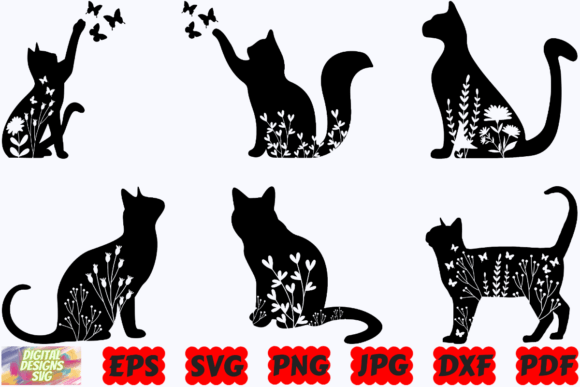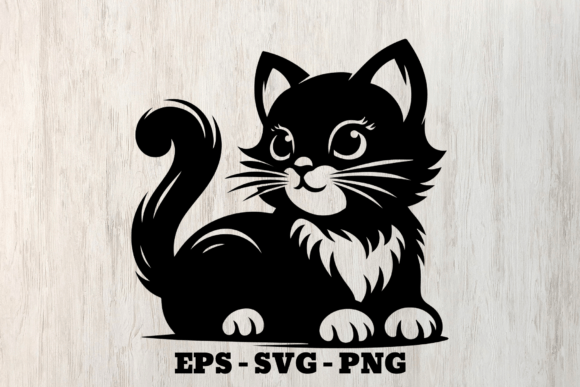
Cat Silhouette Cat SVG
A Clean, Confident Shape — Not Just Another Cat Clipart
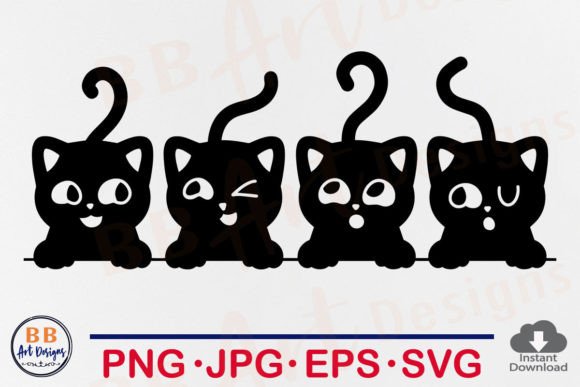
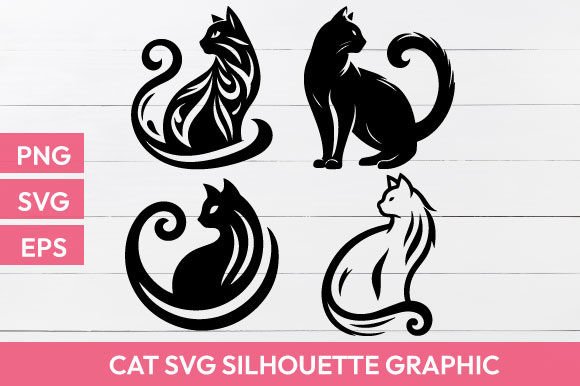
First impression? This isn’t a cutesy, cartoonish cat with exaggerated eyes or frilly ears. The Cat Silhouette Cat SVG is lean, intentional, and quietly expressive — a single, unbroken contour that reads instantly as feline, yet leaves room for interpretation. It’s the kind of shape that works equally well on a minimalist baby onesie or a boutique apron for a cat café. No gradients, no internal line work, no filler elements — just one strong, fluid outline. That simplicity is its biggest strength *and* its first test in real embroidery.
What Happens When You Stitch It — Real Projects, Real Fabric
I tested Cat Silhouette Cat SVG as the centerpiece for a custom embroidered tote bag — natural canvas, medium-weight, slightly textured. I converted it to an embroidery file using standard vector-to-stitch software, opting for a clean satin stitch border with light fill stitch inside (just enough to hold shape without overwhelming the fabric). On the finished bag, it held its form beautifully: crisp edges, no bleeding, no distortion. Customers noticed it immediately — not because it shouted, but because it *belonged*. That’s the quiet power of a well-proportioned silhouette.
It also translated cleanly onto a lightweight cotton sweatshirt — again, as a single-color design. No dense fills meant minimal stabilizer needed, and the stitch count stayed low enough to keep production time efficient for small-batch orders. For baby embroidery? Perfect. I stitched it on a 100% cotton receiving blanket using pastel thread — soft, legible, and gentle on delicate skin. No tiny details to snag or unravel.
Where It Shines — And Where to Pause Before Pressing “Embroider”
- Custom apparel: Works flawlessly on t-shirts, sweatshirts, and caps — especially when placed on flat panels like chest or back. Its smooth curve adapts well to curved surfaces if digitized thoughtfully.
- Embroidered patch: Ideal base shape for a sew-on or iron-on patch. Clean edges mean clean cutting, and the lack of interior complexity keeps backing clean and flexible.
- Personalized gift: Pair it with a name or date in a simple sans-serif font — the contrast between bold silhouette and delicate lettering feels intentional, not cluttered.
- Holiday embroidery: Add subtle seasonal context — a tiny wreath around it for Christmas, a crescent moon beside it for a nursery — without overworking the core shape.
- Craft business & Etsy seller use: It’s versatile enough for multiple product lines — think tea towels, pillow covers, and even digital product previews for your shop banner or listing mockups.
Use With Care On…
Avoid pushing Cat Silhouette Cat SVG into situations where its simplicity becomes a limitation. On very small hoop sizes (under 3”), the curve can lose definition — test stitch at your smallest intended size before committing. On highly textured fabrics like bouclé or thick terry cloth, the outline may soften visually — consider adding a narrow running stitch outline for extra pop. With stretchy fabric, always use cutaway stabilizer and test tension; the smooth lines show every puckering mistake. And while it looks elegant on dark fabric in white or cream thread, avoid fine metallics — they’ll highlight any minor stitch irregularity more than a bolder, matte thread would.
How It Elevates Your Finished Product — Beyond Just “It Looks Nice”
This isn’t just decoration — it’s a subtle signal of craft intention. Because Cat Silhouette Cat SVG avoids trend-chasing clichés, it lends authenticity to handmade products. Customers don’t see “generic cat graphic”; they see thoughtful curation. That builds trust — especially for Etsy sellers or boutique owners whose brand rests on consistency and care. On a personalized gift, it feels personal *without* being overly literal. On a small shop product like a kitchen towel or nursery pillow cover, it adds visual calm rather than visual noise.
It also supports brand consistency. Whether you’re stitching it in navy on linen or charcoal on organic cotton, the shape remains unmistakable. That repeatability matters when building a recognizable line of design assets — whether for physical goods or printable mockups used in digital listings.
Practical Notes Every Embroidery Designer Should Check
- Test on scrap fabric first — especially if using layered stabilizer or blending thread colors.
- Review stitch density — since this is a silhouette-based design, avoid over-filling; let the negative space breathe.
- Confirm hoop size compatibility — the original SVG scales well, but verify your digitizing software preserves proportions at your target dimensions.
- Inspect corners and curves — smooth vector paths usually translate cleanly, but check for unintended stitch jumps in tight turns.
- Try black-and-white mockups — this design relies on contrast, so preview how it reads on both light and dark backgrounds.
- Match thread colors to fabric texture — matte cotton thread reads softer on textured weaves; rayon gives sharper definition on smooth fabrics.
- Verify licensing for commercial use — while the pack states you can use it in your own works and crafts, confirm whether resale of finished embroidered items or redistribution of modified files is permitted under the license terms.
Final Thought: A Design That Serves the Project, Not the Other Way Around
Cat Silhouette Cat SVG doesn’t demand attention — it earns it. It’s the kind of machine embroidery design that disappears into the product just enough to feel native to it, while still carrying quiet personality. For craft business owners, it’s reliable inventory. For hobbyists, it’s stress-free stitching. For Etsy sellers, it’s a quietly confident listing asset — whether used as a standalone embroidery file, adapted into an applique design, or scaled down for a delicate baby embroidery detail. It’s not flashy. It’s functional. And in the world of handmade product and commercial embroidery, that’s often exactly what makes a design indispensable.