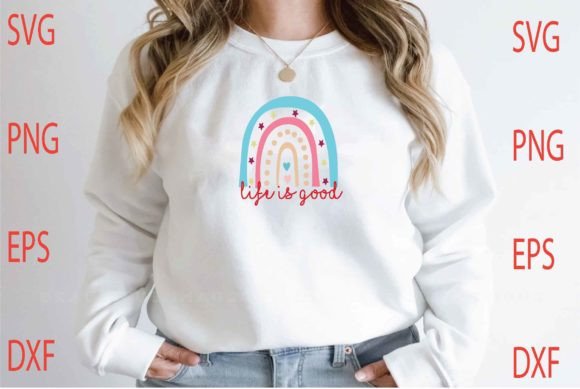
Life is Good SVG Design: A Designer’s Real-World Embroidery Review
First Impressions: Bright, Simple, and Surprisingly Versatile
When I opened the Life is Good SVG Design file set, my first thought wasn’t “cute quote”—it was “this could actually stitch cleanly.” The layout is balanced: clean sans-serif lettering, generous spacing between words, and a gentle rhythm in the curve of the “g” and “o.” It doesn’t shout. It breathes. That matters—especially when you’re stitching on baby onesies or linen tea towels where visual calm reads as quality, not blandness.
Real Project Test: A Custom Embroidered Tote for a Local Boutique
Last week, I used the Life is Good SVG Design to embroider a set of organic cotton tote bags for a neighborhood gift shop. We chose medium-weight canvas, medium-cut tear-away stabilizer, and matte polyester thread in navy and oatmeal. The result? Crisp edges, no puckering, and zero skipped stitches—even at the inner curves of the “d” and “e.” What stood out most was how legible it stayed at 3.5 inches wide. Not too big to overwhelm, not so small that the phrase lost warmth. Customers kept picking up the totes just to read the stitching aloud. That’s the sign of a design that works *with* the product—not just on it.
Where This Design Shines (and Where It Needs Thought)
The Life is Good SVG Design excels in projects where positivity meets practicality:
- Custom apparel: Works beautifully on crewneck sweatshirts and relaxed-fit tees—especially centered above the left chest or across the back yoke.
- Baby embroidery: Softened with pastel thread on cotton knit onesies, it reads gentle—not cutesy—and holds up through repeated washing.
- Embroidered patch: At 2.75–4 inches, it fills a standard patch hoop cleanly; the open letterforms prevent dense fill-stitch buildup that can stiffen fabric.
- Holiday embroidery: Paired with subtle metallic thread on a cream sweater, it adds quiet cheer—no glitter, no fuss, just sincerity.
- Tote bag design: Its horizontal flow matches the natural eye line of a carried bag, making it instantly readable without tilting your head.
Use With Care: Fabric, Fit, and Function
This isn’t a one-size-fits-all embroidery file—and that’s a good thing. Here’s where attention pays off:
- Stretchy fabric: On lightweight jersey or ribbed knits, use cut-away + topping. The letter spacing helps, but loose weave can blur thin strokes if stabilizer is under-applied.
- Dark fabric: The clean lines mean it reads well in light thread—but test contrast with your exact thread brand. Some “ivory” looks grey on charcoal; others pop.
- Curved surfaces: On caps or beanies, reduce width to 2.25 inches max. The “L” and “G” anchors hold shape better than tight serifs would.
- Thin fabric: Avoid satin stitch-heavy versions (not included here—but always verify your file layers). This design leans on clean outlines and open interiors, which is ideal for chambray or gauzy linen.
- Small hoop sizes: Below 3 inches wide, check the “i” dot and crossbars on “t” and “e.” They’re clear in the SVG, but tiny details need sharp needles and steady tension.
Design Integrity Meets Business Reality
As an Etsy seller and craft business owner, I judge designs by three things: how they look stitched, how customers respond, and how easily they scale across products. The Life is Good SVG Design delivers on all three.
Visually, it avoids trend fatigue—it’s not retro, not minimalist to the point of coldness, not overly decorative. That neutrality makes it adaptable: pair it with botanical prints for a kitchen towel line, or layer it beneath a custom monogram on a holiday pillow cover. Stitching clarity builds trust. When a buyer sees even letter weight and smooth curves—not jagged nodes or uneven spacing—they subconsciously register craftsmanship.
For commercial embroidery, its simplicity means fewer thread breaks, faster hooping, and consistent results across batches. And because it’s delivered as Word-by-Layer SVG files, I can isolate “Life,” “is,” and “Good” to adjust kerning or add a small heart icon mid-phrase—without redrawing.
Practical Designer Notes Before You Stitch
- Always test the Life is Good SVG Design on scrap fabric matching your final project’s weight and stretch.
- Check stitch density in the preview—look for areas where fill stitches might crowd narrow letters (they don’t here, but verify).
- Confirm hoop size compatibility: this design scales well from 2.5" to 4.5", but measure your machine’s maximum stable area.
- Inspect corners and terminals in the SVG—clean vector endpoints translate to cleaner satin stitch starts/stops.
- Try black-and-white mockups first. Does the phrase retain personality in monotone? Yes—thanks to intentional spacing and proportion.
- Compare thread color options on both light and dark backgrounds before committing to a palette.
- Use appropriate stabilizer: tear-away for stable wovens, cut-away for knits, and water-soluble topping for napped fabrics like fleece.
- Review licensing terms carefully—this is a digital embroidery file, and commercial use rights depend on the seller’s policy (not stated in the file list, so confirm before selling finished items).
Final Thought: A Quiet Workhorse, Not a Flashy Gimmick
The Life is Good SVG Design won’t go viral for its complexity—but it will sell steadily for years because it respects the craft. It understands fabric. It honors stitch mechanics. And it gives space for the maker’s voice to come through, whether you’re embroidering a single personalized gift or building a cohesive line of handmade products. In a market flooded with overworked graphics and hollow slogans, this one earns its place—not with noise, but with quiet, confident execution.