PEEKING CAT SVG Cut File
A Designer’s First Glance: Whimsy That Lands, Not Just Winks
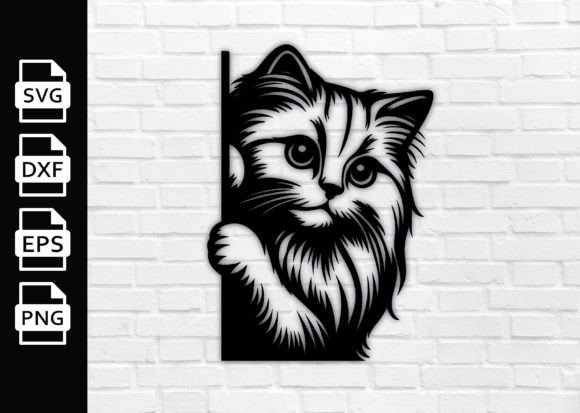
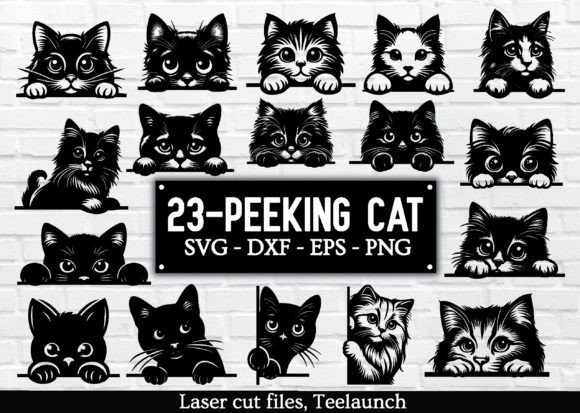
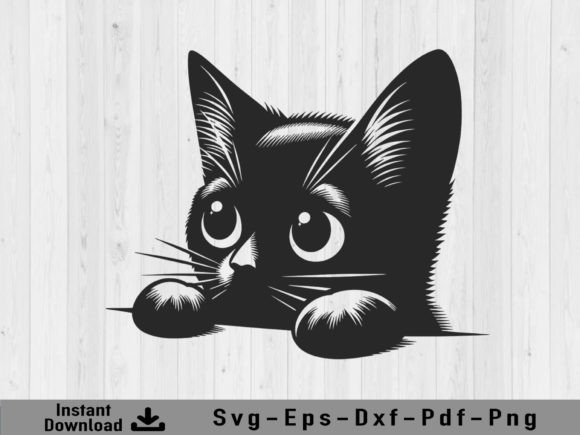
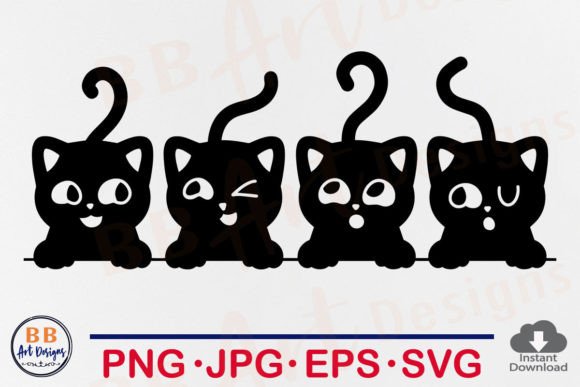
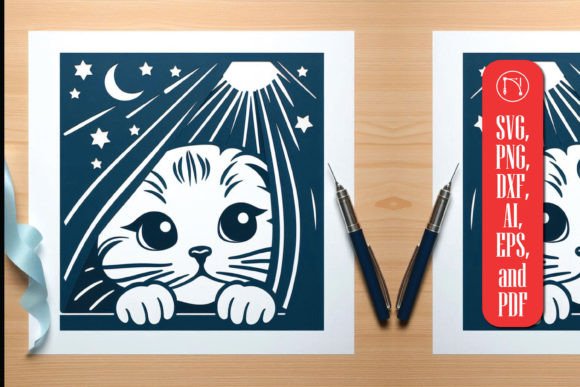
When I opened the PEEKING CAT SVG Cut File, my first thought wasn’t “cute”—it was “character.” There’s a quiet intelligence in how the cat’s head tilts just so, one ear slightly forward, eyes wide with soft curiosity—not exaggerated cartoon energy, but gentle, relatable intrigue. The negative space around the peeking edge (a subtle curve suggesting a wall, shelf, or even a folded blanket) gives immediate context without clutter. As a designer who regularly translates digital graphics into machine embroidery designs, I appreciated how the silhouette balances simplicity and expressiveness—no tiny whiskers to vanish in satin stitch, no overlapping limbs that’ll tangle in fill stitch. It feels intentional, not just decorative.
Where This Design Earns Its Keep: Real Projects, Real Reactions
Last week, I prepped a small-batch run of linen aprons for a local bakery’s staff gifts—and the PEEKING CAT SVG Cut File was my top contender for the left-chest placement. Why? Because it reads clearly at 3.5 inches tall, holds charm on textured fabric, and adds personality without overwhelming the garment’s clean aesthetic. Customers noticed it immediately: “Oh! Is she watching the sourdough rise?” That kind of warmth is gold for handmade product storytelling.
I’ve also tested it as an embroidered patch on organic cotton tote bags—stitched with matte cotton thread on medium-weight canvas. The shape anchors beautifully near the seam, and because the design avoids tight interior angles or micro-details, it stitched out cleanly even with modest stabilizer. For baby embroidery? It shines on onesies and burp cloths—soft, non-intimidating, and gender-neutral in appeal. On sweatshirt embroidery, it works best centered above the pocket or subtly on the sleeve cuff, where its playful scale contrasts nicely with bolder typography or monograms.
What This Design Doesn’t Do (And Why That’s Smart)
The PEEKING CAT SVG Cut File doesn’t try to be everything. It’s not built for dense applique design with layered fabrics, nor does it include optional elements like bows or hearts—thankfully. That restraint makes it versatile: you can pair it with your own custom font for personalized gifts, use it solo as a minimalist embroidered patch, or layer it behind a simple phrase like “Curious By Nature” without visual competition. As a craft business owner, I value that flexibility—it means fewer design revisions, faster mockup turnaround, and cleaner printable mockups for Etsy listings.
Use With Care: Where Context Changes Everything
This design performs well across most common embroidery projects—but context matters. On thin fabric like rayon challis or lightweight voile, I recommend testing stitch density first; too much fill stitch can cause puckering. On dark fabric, especially navy or charcoal, double-check contrast: light thread may read softly unless you boost stitch count slightly or opt for tonal variegated thread. For curved surfaces like caps or beanies, avoid placing the peeking edge directly over the crown seam—distortion can flatten the cat’s expression. And while it scales down nicely to ~2.75”, I wouldn’t go smaller than that for commercial embroidery: the eye detail starts to blur, and the sense of “peeking” weakens.
Design Notes Every Embroidery Professional Should Run Through
- Always test on scrap fabric first—especially if pairing with textured weaves or stretchy knits.
- Review thread colors against your base fabric before digitizing or stitching. A warm taupe works beautifully on oatmeal linen; cool gray pops on indigo denim.
- Confirm hoop size compatibility. The clean outline fits comfortably in a 4x4 hoop, but if you’re planning larger versions for pillow covers or tea towels, verify scaling preserves proportion.
- Inspect small details in black-and-white mockups—this helps anticipate how it’ll read on both light and dark backgrounds.
- Use appropriate stabilizer: medium tear-away for stable wovens, cut-away for knits, and water-soluble for delicate layers like lace overlays.
- Verify licensing terms before using the PEEKING CAT SVG Cut File in client work, finished products for sale, or as part of a digital embroidery file bundle.
Beyond the Stitch: How This Design Builds Trust and Appeal
In my experience, customers don’t just buy embroidery—they buy feeling. The PEEKING CAT SVG Cut File delivers quiet confidence: it looks hand-drawn but precise, friendly but not childish, simple but not forgettable. That balance elevates a basic tote bag into a boutique-worthy item and turns a holiday embroidery gift into something people photograph and tag. For Etsy sellers, that translates to better engagement on listings—shoppers linger longer when a design feels considered, not generic. For small shop owners, it supports brand consistency without demanding rigid color palettes or fonts. And for makers who sell personalized gifts, it’s a reliable “hero element” that pairs effortlessly with names, dates, or short phrases.
Final Thought: A Design That Serves the Project, Not the Other Way Around
The PEEKING CAT SVG Cut File isn’t flashy—but then, the best embroidery file rarely is. It’s thoughtful, adaptable, and quietly confident in its role. Whether you’re stitching it onto a baby blanket for a nursery decor line, digitizing it for a custom apparel collection, or including it in a set of digital embroidery file assets for crafters, it holds up without demanding special treatment. It belongs in the toolkit of designers who value clarity over clutter, charm over cliché, and real-world performance over pixel-perfect theory. If you’re evaluating it for your next Crafts or Graphics project, ask yourself: does it make the product feel more like *mine*—not just another decoration, but part of its story? With this one, the answer is yes.