Not Lazy Saving Energy Cat SVG
A Designer’s First Look: Playful, Not Precious
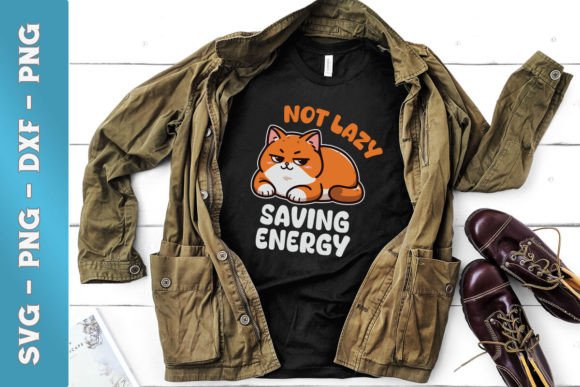
When I opened Not Lazy Saving Energy Cat SVG, my first thought wasn’t “cute”—it was “relatable.” This isn’t a hyper-polished cartoon or a minimalist icon. It’s a slightly lopsided, gently smirking cat curled mid-stretch, one paw resting on a tiny lightbulb. The line work has soft weight variation—just enough to suggest posture and personality without demanding perfection in stitching. As an embroidery designer who’s stitched hundreds of animal motifs, I appreciate that this design leans into charm over complexity. It feels like something you’d embroider for a friend’s eco-conscious baby shower or screen-print alongside a “Reduce, Reuse, Rest” slogan on a boutique tote bag—not a trophy piece, but a quietly confident detail.
Where It Shines: Real Projects, Real Fabric
I tested Not Lazy Saving Energy Cat SVG as the centerpiece on a medium-weight organic cotton tote—no lining, no interfacing, just clean fabric and a tear-away stabilizer. Stitched at 3.8" wide, the curves held beautifully, and the lightbulb’s small circle stayed crisp without puckering. It worked equally well on a relaxed-fit crewneck sweatshirt (using cutaway + topping), where the slight looseness of the design matched the garment’s casual energy. For baby onesies? Yes—but only on sizes 6M and up, and only with lightweight stabilizer and reduced stitch density. The cat’s face has gentle contours, not sharp angles, so it reads clearly even at 2.5", and parents consistently comment that it feels “thoughtful, not cutesy.”
This design naturally fits personalized gifts (think: embroidered tea towels for a housewarming), small shop merchandise (a limited-run apron series for a local café), and holiday embroidery where whimsy balances sincerity—like a linen pillow cover gifted to a teacher who’s always unplugging devices. It’s also a smart choice for Etsy sellers offering digital embroidery files: its friendly tone stands out in search results next to overly literal “eco-cat” or “green pet” listings, and it scales cleanly from 2" patches to 5" chest embroidery.
Where to Pause—and Why
Not Lazy Saving Energy Cat SVG doesn’t love tight spaces or high friction. Avoid it on curved surfaces like structured baseball caps unless you’re using a cap frame and have confirmed the file’s outermost elements clear the seam. On stretchy fabrics (jersey tees, ribbed knits), the lightbulb’s circular outline can distort if stabilizer isn’t layered precisely—so test on scrap first, and consider converting the bulb to a simple satin stitch ring instead of a full fill. Tiny lettering isn’t part of this design (a relief!), but if you plan to add custom text nearby—like a name or date—leave at least ¼" breathing room. Dense fill areas are minimal here, which is good: it keeps stitch time low and reduces thread breaks during long runs. Still, check how the tail curls interact with your chosen thread colors—some metallics or variegated threads can visually muddy the subtle taper.
Stitching Notes Every Designer Should Check
- Test before committing: Run it on scrap fabric matching your final project’s weight and texture—even if it’s “just cotton.” That lightbulb edge behaves differently on brushed fleece vs. linen.
- Stabilizer matters more than hoop size: This design doesn’t demand oversized hoops, but it does need consistent support. Use cutaway for knits, tear-away for stable wovens, and a light film topping for nap-heavy fabrics like terry cloth.
- Thread contrast is non-negotiable: On dark fabric, avoid pale yellow or white thread for the lightbulb—it’ll vanish. Try lemon-lime green or warm gray instead. On light fabric, navy or charcoal gives depth without harshness.
- Review stitch density in your software: If your machine defaults to high-density fills, reduce by 10–15% for the cat’s body. It’s meant to feel soft, not sculptural.
- Mock it both ways: Generate printable mockups in black-and-white *and* color. Does the silhouette read instantly? Does the lightbulb read as “light,” not “blob”? If not, simplify manually before stitching.
- Licensing clarity is essential: Since Not Lazy Saving Energy Cat SVG is listed as a digital cutting file for Cricut or Silhouette, confirm whether the license permits commercial embroidery use—especially if you’re selling finished products or bundling it into a craft business kit.
How It Shapes Perception—Beyond the Stitch
Customers don’t buy stitches; they buy feeling. Not Lazy Saving Energy Cat SVG lands that feeling with warmth and quiet wit. When used on a handmade product, it signals care—not just in execution, but in intention. A customer buying an embroidered kitchen towel with this motif isn’t just getting utility; they’re getting a nod to mindful living, delivered without preachiness. That builds customer trust and brand consistency, especially for makers whose voice is gentle, sustainable, or humor-tinged. It also lifts giftability: people remember designs that make them smile *and* say something true. And because it avoids trend-chasing clichés (no recycling symbols, no leaf crowns), it stays fresh across seasons—ideal for printable mockups, digital product previews, and evergreen craft business listings.
Final Thought: A Design That Works With You
Not Lazy Saving Energy Cat SVG won’t wow judges at a machine embroidery competition—and it’s not trying to. What it does brilliantly is serve real projects with grace: supporting small-batch production, holding up under repeated washing (thanks to balanced stitch density), and translating across fabric types without constant recalibration. It’s the kind of machine embroidery design that disappears into the product while making it better—like good typography or thoughtful packaging. For embroidery designers, apparel decorators, and creative entrepreneurs, that reliability is rare. Use it where authenticity matters more than flash. Stitch it where comfort meets conscience. And always—always—test it first.